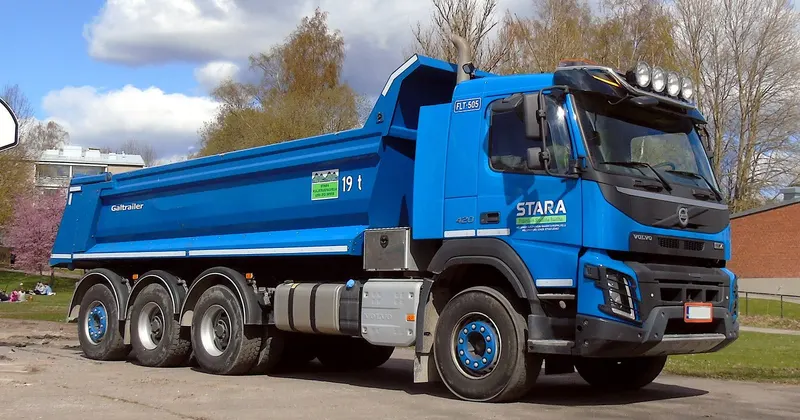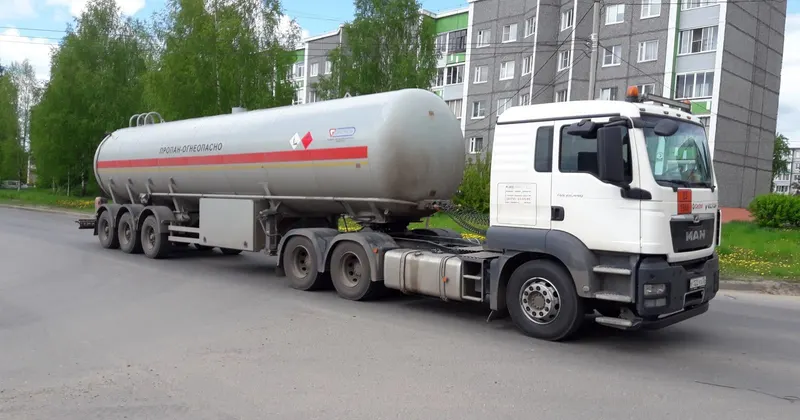
A tanker of diesel, a lorry carrying gas cylinders or a semi-trailer loaded with paint drums. When the goods are dangerous and the transport is for hire or reward, two sets of papers end up in the cab, each under different rules: the ADR ones (European agreement on the international carriage of dangerous goods by road), which are about safety, and the control document, which is about administrative control of transport. You can merge them into a single document, but one does not replace the other by itself. Here is how to make them fit together.
Two sets of rules with different purposes
The control document is regulated by Orden FOM/2861/2012 (the Spanish ministerial order on the control document for road haulage) and lets the authorities know who commissions and who carries out each for-hire goods transport. The paperwork for dangerous goods comes from the ADR, which Real Decreto 97/2014 (the Spanish royal decree on the road transport of dangerous goods) also applies to journeys made entirely within Spain, with the special provisions of its annex 1. Its aim is for the crew, the emergency services and officers to know what is being carried and how to act if something goes wrong.
| Aspect | Control document | ADR documentation |
|---|---|---|
| Rules | Orden FOM/2861/2012 and the Resolution of 5 June 2026 | ADR 2025 and Real Decreto 97/2014 |
| When it is required | In for-hire transport of goods | In all transport of dangerous goods subject to the ADR, including own-account lorries |
| Who completes it | Contractual shipper and actual carrier | The consignor hands the consignment note to the driver; the carrier keeps the written instructions on board (art. 35 of RD 97/2014) |
The first practical conclusion follows from this: if you carry your own diesel in your own lorry with your own drivers, you do not need a control document, but all the ADR documentation is still mandatory. And if you subcontract that same journey to a carrier, you need both.
What has to be in the cab
Section 8.1.2 of ADR 2025 lists the documents to be carried on board and specifies that they must be kept in the cab of the transport unit:
- The transport document under 5.4.1 (the ADR consignment note) for all the dangerous goods being carried.
- The written instructions under 5.4.3, which RD 97/2014 requires in a language the crew understands and which must be readily to hand.
- A photo ID for each member of the crew.
- Where the ADR requires them: the vehicle approval certificate, the driver training certificate and a copy of the competent authority's authorisation in the cases where one is provided for.
If the transport is for hire or reward, a copy of the control document is added to that list: on a mobile phone or printed, with the QR code, handed over before the service starts, as stated in section seven of the Resolution of 5 June 2026.
RD 97/2014 adds two details: the ADR transport documentation must be drawn up in Spanish, without prejudice to other official languages (first additional provision), and the crew must check at the start of the journey that the consignment note and the written instructions are on board (art. 35.4).
A single document for both purposes
Orden FOM/2861/2012 says that the control document is free-format (art. 5) and that, if the transport is documented in a consignment note or other equivalent document containing the data required by article 6, that document serves as the control document (art. 2.2). The Resolution of 5 June 2026 spells this out in its section eight: it allows the format of other transport documents to be used and expressly mentions the transport document under the ADR.
There are two conditions:
- All the data required by article 6 of the order must be present, in addition to what the ADR requires. The two sets do not coincide: the ADR does not ask for the vehicle registration number and the order does not ask for the UN number.
- The contractual shipper and the actual carrier must be identified expressly and separately, with those roles labelled.
And a third one that is often forgotten: if that combined document acts as the control document, it has to comply with the whole resolution. That means a digitally generated PDF, with its unique URL and its QR code, created before the service starts and with a copy for the driver. An ADR consignment note filled in by hand or scanned may be valid for the ADR, but not as an electronic control document.
Consignor, loader and contractual shipper are not the same thing
The ADR consignment note identifies the consignor and the consignee. RD 97/2014 uses the term loader for whoever loads the goods onto the vehicle. Neither of them is necessarily the contractual shipper of the control document, which is the party that contracts the transport directly with whoever carries it out (art. 4 of the order).
For example, a chemicals manufacturer consigns the goods, but the transport is booked with a self-employed haulier by its customer's logistics operator. On the consignment note the consignor is the manufacturer; on the control document the contractual shipper is the operator and the actual carrier is the self-employed haulier. If you combine the two documents, each role has to be labelled with its name.
Combine or keep separate: how to decide
| Situation | Most practical option |
|---|---|
| You are the consignor and also book the lorry, and your software already produces the ADR consignment note as a PDF | One combined document with the data required by both sets of rules |
| The consignment note is issued by the consignor and the transport is booked by another company | Two documents: the consignor's consignment note and the control document from whoever books the transport |
| The same lorry carries consignments from several contractual shippers | One control document per contractual shipper, even though the written instructions and the vehicle certificates are the same |
| Own lorry and driver carrying own goods | Only the ADR documentation, plus whatever proves that it is complementary private transport |
Also consider what happens when something has to be corrected en route. If the document is combined and you generate a new version of the control document, your consignment note changes too. The driver must be left with a single valid version of both, not the old consignment note on paper and the new one on a phone.
And a word of caution: the fact that the control document is electronic does not mean you can carry the ADR consignment note on a phone alone. The conditions under which the ADR accepts electronic means are not those of the control document Resolution, and in an incident the emergency services must be able to read the data without depending on a phone. Check with your safety adviser before dropping the paper.
Pre-departure checklist
- ADR consignment note in the cab, in Spanish, with the details of all the dangerous goods loaded.
- Written instructions to hand, in a language the crew understands.
- Driver training certificate and, where applicable, the vehicle approval certificate.
- If the transport is for hire or reward, control document generated before departure and in the driver's hands.
- If the document is combined, contractual shipper and actual carrier labelled separately from the consignor and the consignee.
- Registration number of the tractor unit and of the trailer or semi-trailer, also on the combined document.
- Only one valid version of each document.
How DeCA handles it
DeCA generates the control document, not the ADR documentation, which remains the responsibility of the consignor and their safety adviser. But it fits both ways of working. If your software already produces the consignment note or delivery note as a PDF with the article 6 data, you upload it to DeCA: its data is read, you place the QR code and that same PDF is published as the control document, with its unique URL. If you prefer to keep them separate, you create the control document from the web form and the driver receives it via WhatsApp or on the printed ticket, alongside the usual consignment note.
You can find the ways to connect it in DeCA integrated with your software. If you are the one booking the lorries, DeCA for shippers explains what data you provide. And if the journey leaves the country, the consignment note that applies is a different one: you will find it in the guide control document or CMR.